How many ghats are there?
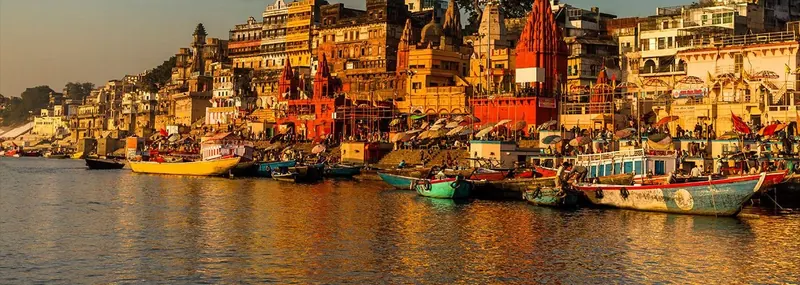
Varanasi has more than 80 ghats along about 6 to 7 km of the western bank of the Ganga. Some are religious, some are used for bathing, some for cremations and some are quiet and residential.
The ones most visitors see
- Assi Ghat: the southern end, known for sunrise and the morning programme.
- Tulsi Ghat: associated with the poet Tulsidas.
- Harishchandra Ghat: one of the two cremation ghats.
- Kedar Ghat: a lively ghat with a temple and a busy staircase.
- Dashashwamedh Ghat: the main ghat and home of the evening aarti.
- Manikarnika Ghat: the main cremation ghat, best observed respectfully from the water.
- Panchganga Ghat: where five rivers are said to meet.
Walking or by boat
Walking lets you see daily life up close, but not all ghats are connected by a continuous path. A boat ride covers the length in one go and gives you the best overview.
Etiquette on the ghats
- Do not photograph cremations.
- Do not litter or enter the water without understanding the local rules.
- Dress modestly and avoid loud behaviour.
- Ask before taking photographs of people.
Frequently asked questions about Ghats of Varanasi: A Guide to the Most Important Ghats
Which ghat is best for sunrise?
Assi Ghat and the stretch up to Dashashwamedh offer good light, and a boat gives the best view of all of them.
Still have a question? Ask us on WhatsApp